Introduction
If you have recently searched for “Mary Nightingale illness,” you are not alone. Thousands of people across the UK and beyond type that phrase into Google every week, hoping for a clear and honest answer. As one of Britain’s most trusted television news presenters, Mary Nightingale has spent more than two decades as the calm, authoritative face of ITV Evening News. So when her name starts appearing alongside words like “cancer,” “throat condition,” or “health scare,” public concern is entirely natural.
But what is actually true? What is verified, what is speculation, and where did these rumours originate in the first place?
This article answers all of those questions. It separates confirmed facts from unverified claims, explains why health rumours spread so fast about public figures, and provides a fully up-to-date 2026 status on Mary Nightingale’s health and career. Whether you are a long-time viewer, a journalism student, or someone who simply wants the truth, this guide covers everything you need to know, fairly, accurately, and with proper context.
Who Is Mary Nightingale?
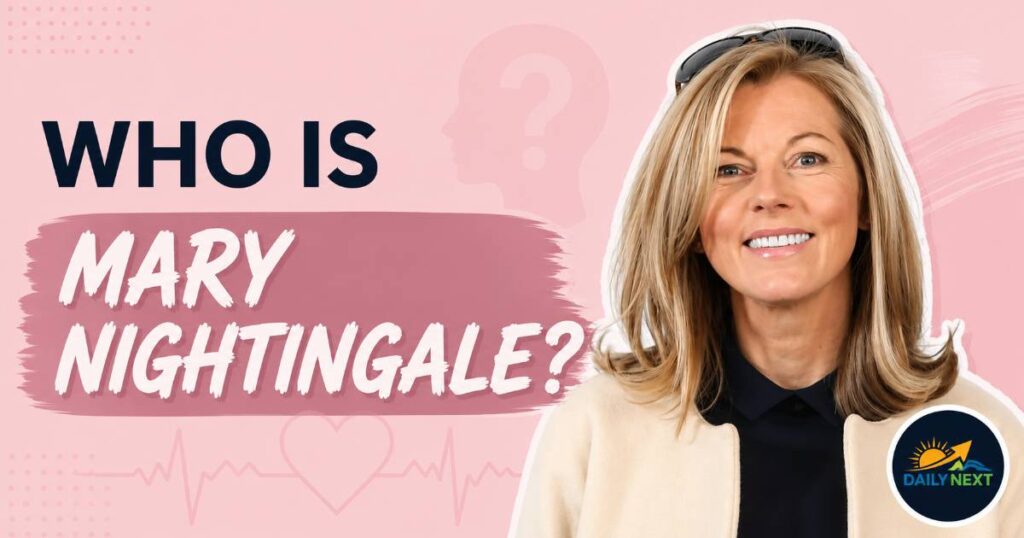
Mary Nightingale is one of the most recognisable journalists in British broadcasting. Born on 26 May 1963 in Scarborough, North Yorkshire, she studied English at Bedford College, University of London, before beginning her career in media.
Early Career and Rise to ITV
She started out as a presenter and writer at World Business Satellite for TV Tokyo, then moved to BBC World’s World Business Report covering economic and corporate news. Her next major step came at Carlton Television, where she hosted London Tonight, a regional evening news programme. That role helped her develop the warm yet authoritative delivery that would define her career.
In 2001, Mary joined ITV News as the main presenter of ITV Evening News, stepping into a role previously held by legendary broadcaster Trevor McDonald. It was a prestigious appointment that placed her at the centre of British news culture.
Read More: Jamie White-Welling: Biography, Career, and Personal Life After Divorce
Career Highlights
Since joining ITV, Mary Nightingale has reported on some of the most significant events in modern history. A few of her most notable moments include:
- Coverage of 9/11 and its aftermath in the United States
- Reporting on royal milestones and funerals, including the funeral of Queen Elizabeth II
- Broadcasting live through multiple general elections
- Anchoring ITV’s breaking news coverage of King Charles III’s cancer diagnosis in February 2024
- Winning the TRIC Newscaster of the Year award on two separate occasions
She is also a long-standing patron of the Rainbow Trust Children’s Charity, which supports families of children with life-threatening conditions. Her charity work often involves speaking about illness and medical hardship, but always on behalf of others, not herself.
Quick Profile
| Detail | Information |
| Full Name | Mary Nightingale |
| Date of Birth | 26 May 1963 |
| Birthplace | Scarborough, North Yorkshire |
| Education | BA English, Bedford College, University of London |
| Current Role | ITV Evening News Presenter |
| ITV Start Year | 2001 |
| Awards | TRIC Newscaster of the Year (twice) |
| Husband | Paul Fenwick |
| Charity Work | Rainbow Trust Children’s Charity Patron |
Where the Rumor Came From
Understanding the origin of the “Mary Nightingale illness” narrative is essential before making any judgements about her health. The rumour did not emerge from a single event. It grew from several overlapping factors that, when combined, created the impression of a health story where none had been officially confirmed.
Three Main Sources of the Rumour
1. A Genuine Early-Career Vocal Health Challenge
Shortly after joining ITV in 2001, Mary began experiencing troubling throat and voice symptoms. Her voice would crack during live broadcasts, fade without warning, and sometimes struggle with projection during high-pressure moments. After one particularly long broadcast following the death of the Queen Mother, her symptoms became notably worse.
The private struggle became public knowledge in 2002 when reports confirmed she had been tested for throat cancer. Medical testing did eventually rule out cancer. The diagnosis was stress-related vocal cord strain, caused by a combination of the intense pressure of daily live broadcasting, long hours, and improper breath control technique.
This was a confirmed medical episode, but it occurred over two decades ago, was resolved, and does not reflect her current health status.
2. Confusion with Another ITV Presenter
In 2024, another ITV presenter, Rageh Omaar, collapsed live on air due to illness. Clips of that incident circulated widely, and some viewers mistakenly associated it with Mary Nightingale. This kind of confusion is common in the age of algorithm-driven social media.
3. The 2024 Deepfake Crisis
ITV news anchor Mary Nightingale expressed outrage after discovering that her likeness had been used in a deepfake video promoting a financial investment app. The manipulated video, which surfaced on social media, depicted Nightingale as if she were presenting the ITV Evening News.
Mary condemned it as identity theft and used the incident to advocate for stronger AI regulation and digital protections. This high-profile incident significantly increased online searches around her name, which in turn pushed speculation about her personal health further into public view.
4. A Search Engine Algorithm Effect
On 5 February 2024, Mary Nightingale was the face of ITV’s breaking news coverage of King Charles III’s cancer diagnosis. Millions of viewers searched phrases like “Mary Nightingale King Charles cancer” in real time. Over weeks, search algorithms dropped “King Charles” from the autocomplete prediction, leaving the deeply misleading search suggestion “Mary Nightingale cancer.” This is a documented SEO phenomenon where a reporter becomes algorithmically linked to the subject they are reporting on.
What We Know (Verified Facts)
This section deals only in confirmed, sourced information. It is deliberately separate from speculation.
Confirmed Facts at a Glance
- Mary Nightingale was tested for throat cancer in 2002. The result was negative. No cancer was found.
- The confirmed diagnosis from that period was stress-related vocal cord strain, not a chronic or life-threatening illness.
- She has continued to present ITV Evening News consistently since her recovery, and remains the programme’s primary anchor.
- In 2024, she was the victim of an AI-generated deepfake video used to promote a fraudulent investment app. She spoke publicly about it and described the experience as identity theft.
- She is a patron of the Rainbow Trust Children’s Charity. Her public statements about illness and medical struggle refer to the charity’s beneficiaries, not herself.
- As of April 2026, there is no verified information confirming any illness affecting Mary Nightingale. She continues to appear on ITV Evening News, fulfilling her role as a trusted presenter.
- As of April 2026, Mary Nightingale remains active on ITV Evening News and has not disclosed any illness publicly. ITV continues to list her as the programme’s anchor, and she has appeared in recent broadcasts, interviews, and public events.
- In 2022, ITV expanded the ITV Evening News to a one-hour format with Nightingale as lead presenter, and that expanded role has continued into 2026, reinforcing her central position at the network.
- There have been no credible reports of any recurrence of her previous vocal difficulties or any other major health concerns as of early 2026.
A Summary Table of Verified vs Unverified Claims
| Claim | Status |
| Tested for throat cancer in 2002 | Verified — cancer ruled out |
| Diagnosis of stress-related vocal strain in 2002 | Verified |
| Current serious illness (cancer, chronic condition) | Not verified — no official confirmation |
| Deepfake video targeting her in 2024 | Verified — publicly confirmed by Mary |
| Confusion with Rageh Omaar’s collapse | Verified incident — incorrect association |
| Retirement from ITV | Not verified — no credible reports |
| Prolonged medical leave in 2025 or 2026 | Not verified — no official confirmation as of April 2026 |
What We Don’t Know (Speculation & Gaps)
Honesty demands acknowledging what remains unclear. The following areas involve genuine information gaps rather than confirmed facts.
Key Unanswered Questions
Does she have any current private health condition? Mary has not made any public statement about ongoing health issues. That silence does not confirm illness, and it does not rule it out either. Like any private individual, she is entitled to keep personal medical matters to herself.
What caused the minor schedule changes some viewers noticed? In television journalism, temporary absences can occur for many reasons, including personal or professional reasons. These absences do not necessarily indicate serious illness. Speculation online often grows without factual evidence, which is why relying on verified information is essential.
Are there any current vocal health concerns? No official source or credible media outlet has confirmed ongoing vocal difficulties. Any voice variations viewers notice during live broadcasts are entirely normal in high-pressure broadcasting environments and are not evidence of illness.
The honest answer is this: we do not know whether she is privately managing any health condition, because she has not said. What we do know is that no credible outlet has reported it, and she continues to appear actively on screen.
Why Health Rumors Spread Fast — Media & Psychology Lens
The “Mary Nightingale illness” story is not unique. It follows a well-documented pattern seen with almost every long-serving public figure. Understanding why this happens helps viewers think more critically next time they see a trending headline.
The Psychology Behind Celebrity Health Rumours
Parasocial Relationships
Viewers who watch the same news presenter every evening develop a strong sense of familiarity. This is called a parasocial relationship. It is one-sided in reality, but it feels genuine. When someone you feel close to is rumoured to be unwell, your concern response activates just as it would for someone you know personally.
The Anxiety Heuristic
Humans are wired to pay more attention to bad news than good. A headline suggesting a trusted figure might be ill generates far more clicks than one confirming they are fine. This is not malicious. It is basic cognitive psychology. But it does mean alarming content spreads faster online.
Algorithm Amplification
Social media platforms prioritise content that generates engagement. Concern, outrage, and curiosity all drive engagement. This means rumours, once seeded, can spread far faster than corrections or clarifications.
How the Media Landscape Makes It Worse
Low-quality websites often publish speculative articles about celebrity health with dramatic headlines but no sourced information. These pages rank on search engines because they match trending search terms, not because they contain accurate reporting. This creates a self-reinforcing cycle: the more people search, the more content gets created, the more people search again.
Search spikes around well-known presenters usually happen for a few reasons: public absence, algorithmic suggestion, low-quality SEO pages, and confusion created when a journalist’s name becomes attached to a major health news story they are reporting.
Ethical Considerations & Media Literacy
Publishing speculation about a public figure’s health comes with genuine ethical responsibilities. This section examines those responsibilities honestly.
What Responsible Journalism Looks Like
Responsible reporting on a public figure’s health follows clear principles:
- Do not state unconfirmed diagnoses as fact. Writing “Mary Nightingale has cancer” when no credible source has confirmed it is false reporting, regardless of how many websites repeat it.
- Separate the person from the subject they report on. Mary presented the coverage of King Charles III’s cancer announcement. That does not mean she has cancer.
- Respect the right to medical privacy. No public figure is obligated to disclose health conditions. Fame does not remove that right.
- Cite primary sources. Any credible health claim about a public figure should be traceable to an official statement, a reputable outlet, or the person themselves.
The Deepfake Dimension
The 2024 deepfake incident adds an important new layer to this conversation. ITN warned of the threat posed by AI-generated deepfake online videos and other misleading content featuring some of its leading journalists, noting that social platforms including Meta can be slow to act once alerted to such content.
By 2026, this problem has only grown more serious. AI-generation tools have become more accessible, and the gap between a convincing deepfake and an authentic broadcast clip has narrowed further. When AI can place a trusted journalist’s face and voice in entirely fabricated contexts, the ability to distinguish real statements from manufactured ones becomes critical. This makes media literacy more important than ever, and Mary’s 2024 experience now serves as one of the clearest documented examples of how this technology threatens both individual reputations and public trust in news.
Tips for Evaluating Celebrity Health Claims
- Always look for a named primary source. Who confirmed this? Is it ITV, the person themselves, or a recognised news agency?
- Check the publication date. Old stories about health scares are often recycled as if they are current.
- Search for the claim on trusted outlets like the BBC, The Guardian, or ITV News directly. If they have not reported it, treat it with serious scepticism.
- Do not treat search autocomplete as evidence. Autocomplete reflects search volume, not verified truth.
Comparative / Contextual Section
Mary Nightingale’s situation is not isolated. Several other prominent UK broadcasters have faced similar patterns of online health speculation. Looking at comparable cases helps illustrate how widespread this phenomenon has become.
Similar Cases in British Broadcasting
| Presenter | Network | Health Claim That Circulated | Outcome |
| Mary Nightingale | ITV | Throat cancer, general illness | Vocal strain confirmed (2002); cancer ruled out; no current illness confirmed |
| Rageh Omaar | ITV | Collapsed on air due to illness | Confirmed on-air health incident in 2024 |
| Huw Edwards | BBC | Mental health, hospitalisation | Confirmed mental health issues publicly disclosed |
| Holly Willoughby | ITV | Various online speculation | No confirmed serious illness |
| Andrew Marr | BBC/GBN | Stroke | Confirmed publicly in 2013 |
The table above shows that some broadcaster health stories are confirmed and reported responsibly. Others remain in the territory of speculation. The critical difference is always whether a credible primary source has confirmed the claim.
Best Practices for Voice Health in Media Roles
Mary Nightingale’s early-career vocal health challenge has practical relevance for anyone working in broadcasting, teaching, presenting, or any role that relies heavily on the voice. Her experience highlights how quickly vocal problems can develop under sustained pressure, and how effectively they can be resolved with the right support.
Common Causes of Vocal Strain in Broadcasters
- Extended live broadcasts without adequate rest breaks
- Dehydration during long studio sessions
- Incorrect breathing technique, relying on the throat rather than the diaphragm
- High-stress environments that create psychosomatic vocal tension
- Failure to warm up the voice before going live
What Professionals Can Do to Protect Their Voice
Daily habits that help:
- Drink water consistently throughout the day. Hydration is the single most accessible tool for vocal health.
- Take scheduled vocal rest periods, particularly after long broadcasts.
- Practise diaphragmatic breathing. This reduces strain on the vocal cords by engaging the full respiratory system.
- Avoid shouting or whispering, both place extreme strain on the cords.
- Work with a trained speech therapist or vocal coach regularly, not just when problems arise.
Signs that require professional attention:
- Persistent hoarseness lasting more than two weeks
- Pain while speaking
- Sudden unexplained voice loss
- Crackling or fading during normal conversation
Mary Nightingale’s recovery from stress-related vocal strain demonstrates that with professional help, proper technique, and adequate rest, vocal health challenges can be fully resolved. Her continued presence on screen more than two decades later is evidence of that recovery.
Current Status & What It Means
This section provides the clearest possible 2026 picture of where things stand.
Mary Nightingale in 2026: A Factual Summary
As of April 2026, the position is straightforward based on all available verified information:
- Mary Nightingale is actively presenting ITV Evening News and continues to be listed as the programme’s primary anchor by ITV.
- She has not made any public statement confirming a current illness. No official statement from her or ITV News exists regarding any chronic, life-threatening, or ongoing health condition.
- No credible UK news outlet, including the BBC, The Guardian, or Sky News, has reported a serious health condition.
- She has appeared in public events, high-profile interviews, and regular broadcasts throughout early 2026.
- In 2022, ITV expanded the evening programme to an hour-long format with Nightingale as its presenter, underlining how central she remains to the network’s identity even now.
- There have been no credible reports of any recurrence of her previous vocal difficulties or any other major health concerns as of 2026.
- At 62 years old in 2026, she continues to present ITV Evening News with the same professionalism, clarity, and composed authority that have defined her entire career.
- The demanding nature of nightly live broadcasting itself, requiring sustained vocal performance, mental sharpness, and physical stamina, is evidence of continued good health.
- The deepfake incident of 2024 is a confirmed and documented event, but it relates to online fraud and AI misuse, not her personal health in any way.
- Her 2002 vocal health episode is entirely historical. It was resolved more than two decades ago and does not reflect her current condition.
What This Means for Viewers
If you were genuinely worried about Mary Nightingale’s health after reading online rumours, the evidence available in 2026 is reassuring. She continues to show up, deliver the news, and do the job she has done reliably for over two decades. One credible health-focused outlet summarised it plainly as of early 2026: there have been no credible reports of any recurrence of her previous vocal difficulties or any other major health concerns. That is the most transparent signal available.
If her health status changes and she or ITV choose to share that publicly, it will be reported by credible outlets. Until then, the responsible position is to acknowledge that no confirmed illness exists in 2026.
Conclusion
The story of “Mary Nightingale illness” is, in many ways, not really a health story at all. It is a story about how the internet processes public figures, how algorithms can manufacture associations that have no basis in fact, and how genuine concern from loyal viewers can be exploited by low-quality content designed only to generate clicks.
What is confirmed is this: Mary Nightingale experienced a stress-related vocal cord condition in the early 2000s that was serious enough to prompt medical testing. Cancer was ruled out. She recovered, returned to full broadcasting, and has remained one of Britain’s most respected news presenters ever since. In 2024, she was the victim of a sophisticated deepfake scam that placed her at the centre of online fraud. She handled it with the same directness and integrity that defines her journalism.
As of April 2026, there is no verified evidence of any current illness, chronic condition, or planned departure from ITV. Mary Nightingale continues to be exactly what millions of UK viewers see each evening: a capable, experienced, and committed journalist doing her job with clarity and professionalism. At 62 in 2026, she is, if anything, a stronger presence than ever, in a media landscape that has changed dramatically around her.
The lesson here applies beyond Mary Nightingale. In the digital age, the line between rumour and reported fact can blur very quickly. The antidote is not cynicism. It is informed, patient media literacy that asks: who confirmed this, where was it reported, and does the primary evidence actually support the claim?
In this case, the answer is clear. The rumour outran the reality by a considerable distance.
FAQ
What illness does Mary Nightingale have?
As of April 2026, no confirmed illness has been publicly disclosed by Mary Nightingale or ITV. The only verified health episode in her career was a stress-related vocal cord condition in the early 2000s, which was fully resolved.
Did Mary Nightingale have cancer?
No. Mary was tested for throat cancer in 2002, but the result was negative. No credible source in 2026 has confirmed any cancer diagnosis. The rumour has spread largely due to algorithmic confusion and online speculation.
Why is Mary Nightingale trending for illness searches?
Several overlapping factors caused the trend: her 2024 coverage of King Charles III’s cancer diagnosis, confusion with Rageh Omaar’s on-air collapse, a deepfake video incident, and low-quality speculative articles that rank for health-related search terms.
Is Mary Nightingale still on ITV in 2026?
Yes. She continues to present ITV Evening News and remains one of the network’s primary anchors as of 2026. ITV still officially lists her in that role.
What was the Mary Nightingale deepfake incident?
In early 2024, an AI-generated video circulated on Instagram showing Mary Nightingale appearing to promote a fraudulent investment app. She described it as identity theft and used it to call for stronger protections against deepfake technology.
How old is Mary Nightingale?
Mary Nightingale was born on 26 May 1963, making her 62 years old in 2026.
What awards has Mary Nightingale won?
She has twice been awarded the TRIC Newscaster of the Year award and has received multiple nominations for broadcasting excellence throughout her career.
Did Mary Nightingale leave ITV?
No. There is no credible or official report confirming that Mary Nightingale has left or plans to leave ITV. She remains an active and central part of ITV Evening News as of 2026.
What was Mary Nightingale’s voice problem?
In the early 2000s, shortly after joining ITV, she experienced persistent vocal cord strain linked to stress, long hours, and broadcasting pressure. The condition was not caused by physical illness and was treated through vocal coaching, rest, and stress management techniques.
Why do health rumours spread about news presenters?
Public figures who appear on screen daily develop strong parasocial bonds with viewers. Any change in appearance, voice, or schedule triggers concern. Combined with algorithm-driven social media and clickbait publishing, that concern quickly becomes rumour, even without any factual foundation.