Introduction
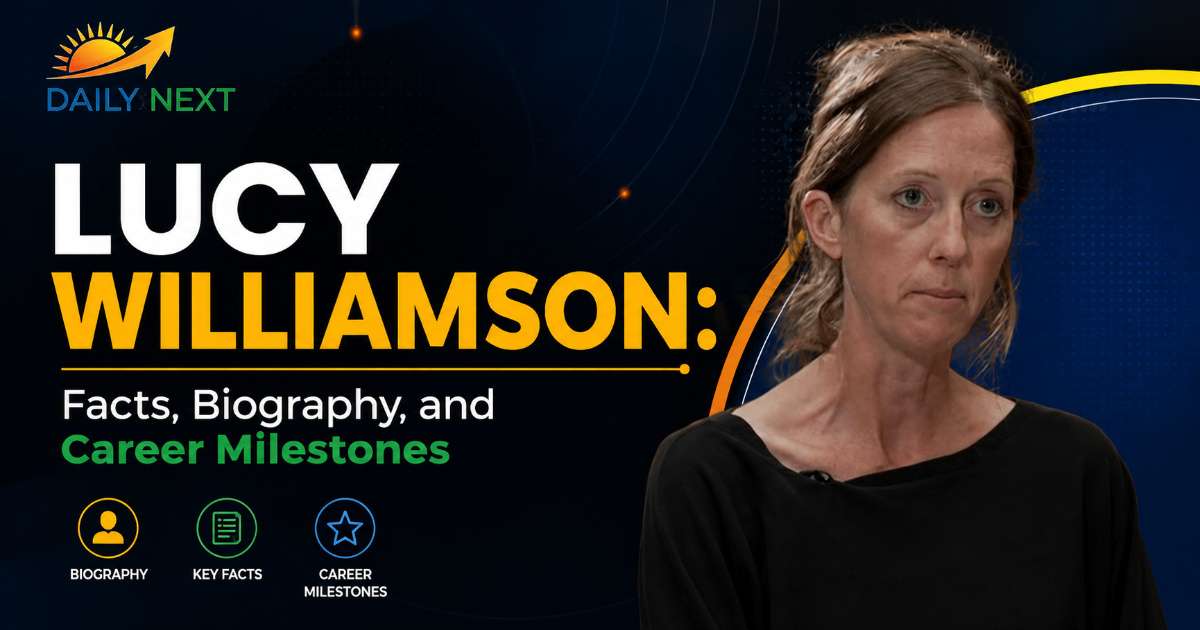
In a media landscape full of noise and sensationalism, certain journalists stand apart simply by doing their jobs with consistency, precision, and courage. Lucy Williamson is one of those journalists. As a senior BBC foreign correspondent with over two decades of experience, she has earned a reputation for delivering some of the clearest, most human-centered international reporting seen on British television.
From the chaos of post-tsunami Indonesia to the political tensions of the Korean peninsula, from the streets of Paris during deadly terror attacks to the war zones of the Middle East, Lucy Williamson has been there. She has reported it all with the same calm, balanced, and deeply researched approach that makes her one of the most respected voices at BBC News today.
This article covers her early life, educational background, career milestones, reporting style, major stories, and personal life in full detail. Whether you are a journalism student, a news follower, or simply curious about who she is, this guide offers an in-depth look at the woman behind the byline.
Early Life and Education
Where Lucy Williamson Grew Up
Lucy Williamson was born and raised in the United Kingdom, most likely in the mid-1970s, though she has never publicly confirmed her exact birth date. From a young age, she showed a strong interest in language, world cultures, and current affairs. That curiosity eventually led her toward a career in international journalism.
Academic Foundation at the University of Manchester
She studied at the University of Manchester, graduating in 1997 with a degree in English and Persian, a combination that laid the foundation for her deep understanding of language, culture, and international affairs.
This choice of subjects was far from accidental. Studying Persian gave Williamson a rare linguistic edge, one that would later prove invaluable when covering Middle Eastern politics, culture, and conflict. Her English studies sharpened her ability to tell stories clearly and powerfully. Together, the two disciplines produced a journalist who could interpret world events with both analytical rigor and cultural sensitivity.
Many international correspondents rely on translators and briefings. Williamson’s language skills allowed her to move a step closer to original sources, giving her reporting an added layer of authenticity and depth.
Career Beginnings
Joining the BBC in 2002
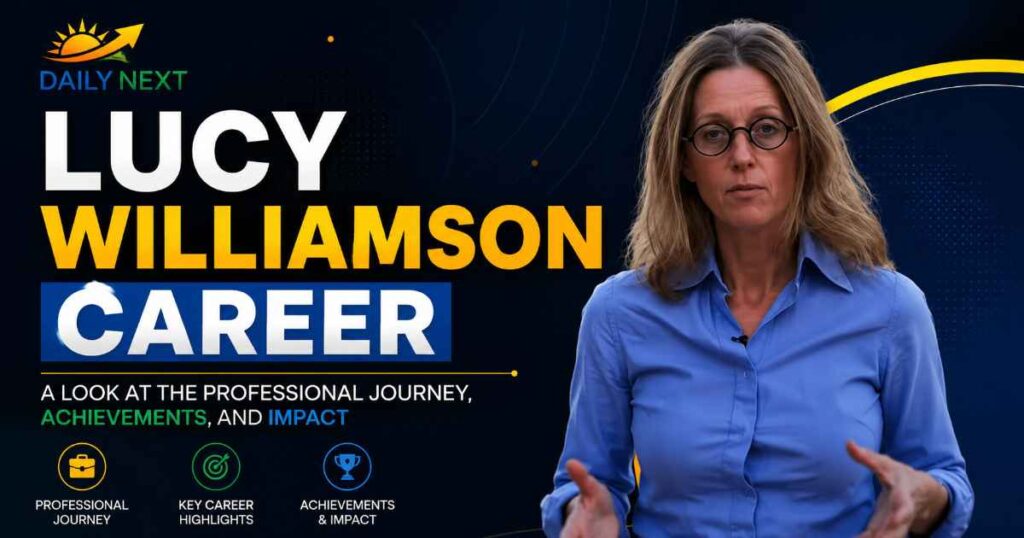
After joining BBC in October 2002, Lucy Williamson began her journey as a reporter based in London, where she honed her skills and gained valuable experience.
Her early roles involved production work, news editing, fact-checking, and field reporting for major BBC programs including Newsnight and Today. These early roles sharpened her journalistic skills, teaching her the importance of accuracy, storytelling, and ethical reporting.
Rather than rushing into high-profile assignments, Williamson spent her early BBC years building solid newsroom foundations. She learned deadline pressure, editorial discipline, and the craft of explaining complex stories in a way that audiences could understand without feeling talked down to. These were the skills that would define her later foreign correspondence.
Early Reporting Style
Even in her first years at the BBC, Williamson was known for being thorough rather than theatrical. She was never the kind of journalist who made herself the center of the story. Her early colleagues noted her ability to stay composed under pressure, a trait that would become her hallmark in much more dangerous situations later in her career.
Read More: Stephen Gillen Net Worth: How He Turned Adversity into Achievement
BBC Career Highlights
A Career Spanning Three Continents
Lucy Williamson’s BBC career is defined by a series of prestigious international postings, each demanding a different set of journalistic and cultural skills. Here is a clear overview of her major postings:
| Posting | Location | Key Coverage |
| London Correspondent | UK | Domestic and international news |
| Jakarta Correspondent | Indonesia | 2004 tsunami aftermath, political unrest, East Timor |
| Seoul Correspondent | South Korea | North/South Korea tensions, regional geopolitics |
| Paris Correspondent | France | Charlie Hebdo, Yellow Vest protests, French elections |
| Middle East Correspondent | Jerusalem/Tel Aviv | Gaza conflict, Iran-Israel tensions, humanitarian crises |
Jakarta: Covering One of History’s Worst Natural Disasters
Her first major international posting was in Jakarta, Indonesia, where she covered some of the most important stories in Southeast Asia, including the aftermath of the 2004 tsunami that devastated Indonesia and the political developments in East Timor.
This period proved to be a powerful test of her abilities. Covering a natural disaster of that scale requires enormous sensitivity, organizational skill, and the ability to handle emotionally overwhelming situations while still producing clear and accurate reports. Williamson passed that test.
Seoul: Reporting on the World’s Most Tense Border
During her tenure as the Seoul correspondent, Lucy Williamson showcased her exceptional reporting abilities. She covered significant events, including the aftermath of the tsunami in Indonesia, bomb attacks, and the path to stability in East Timor.
Her time in Seoul placed her at the center of one of the world’s most complicated geopolitical situations. Reporting on North and South Korea demands precision. A single misquote or mistaken claim can create diplomatic consequences. Williamson navigated this environment with characteristic care, always grounding her reports in verified facts and careful context.
Paris: Four Years at the Heart of Europe
In 2014, Lucy Williamson became the BBC’s Paris correspondent. From this position, she covered a wide range of issues, including French presidential elections and the rise of populism, social unrest such as the Yellow Vest protests, the aftermath of terror attacks in France, and broader European Union challenges, including Brexit’s impact on France and continental politics.
Her Paris posting placed her in the middle of some of the most significant European news stories of the decade. She was there during the Charlie Hebdo attacks of January 2015. She reported on the devastating Bataclan massacre later that same year. She covered months of Yellow Vest protests that shook the French government. Each story required a different approach, and Williamson handled each with professionalism.
Middle East Correspondent: The Toughest Beat in Journalism
As of 2025, Lucy Williamson is the BBC’s Jerusalem Middle East correspondent. Throughout the current conflict, she has been reporting from Gaza and the West Bank.
Her current posting is widely considered to be one of the most demanding in all of broadcast journalism. Reporting from a conflict zone where every word is analyzed through the lens of political bias, where physical danger is constant, and where the human suffering is immense, Williamson has continued to deliver the kind of measured, fact-based journalism that the BBC depends on.
Major Stories and International Reporting
The 2004 Indian Ocean Tsunami
One of the earliest defining moments of Williamson’s foreign career came with the 2004 Indian Ocean tsunami. Reporting from Indonesia, she covered both the immediate devastation and the long recovery process. Her reports gave Western audiences a clearer picture of the scale of destruction and the human resilience that followed.
Terror Attacks in France
During her Paris years, Williamson reported directly from the scenes of two of France’s worst modern terrorist attacks: the Charlie Hebdo shootings and the Bataclan concert hall massacre. Her reports are known for being balanced and deeply researched. She focuses on facts while also showing the emotional reality faced by local people.
The Andrew Tate Interview (2023)
One of Williamson’s most high-profile recent projects is her coverage of Andrew Tate, the controversial influencer currently facing serious allegations in Romania. In 2023 and 2024, Lucy Williamson produced several BBC reports and a major BBC documentary examining Tate’s rise, influence, and the criminal investigation surrounding him.
She asked him some proper questions about what he thinks of women and he got properly rattled. Began repeating to her that she wasn’t “the boss” and he was following “divine instruction.” She didn’t back down, though. Just kept asking.
This interview became widely shared online and demonstrated a different dimension of Williamson’s journalism. She was not simply covering wars and elections. She was also capable of holding controversial figures to account in a direct, unrelenting manner while maintaining complete professionalism.
Gaza and Middle East Conflict Coverage (2024-2026)
Lucy Williamson has reported as Middle East correspondent, Tel Aviv, on the exchange of fire between Iran and Israel, the Middle East’s two arch-enemies, and has covered ceasefire developments including reports on children evacuated from Gaza who were reunited with relatives.
Her current work in the Middle East represents the peak of her foreign correspondence career. The stories she is covering now involve some of the most complex moral, political, and humanitarian questions of our time.
Achievements and Awards
While Lucy Williamson has never publicly pursued awards or public recognition, her professional achievements speak clearly through the level of trust the BBC places in her. Being appointed to three successive major international postings, Jakarta, Seoul, Paris, and now the Middle East, is itself a significant recognition of her abilities.
Key professional achievements include:
- Over 20 years of uninterrupted international reporting for one of the world’s most trusted news organizations
- Coverage of multiple humanitarian crises, natural disasters, and geopolitical conflicts
- Conducting high-profile interviews with political leaders, conflict survivors, and controversial public figures
- Providing authoritative analysis across BBC World News, BBC News at Ten, and BBC Radio
- Building a career based on journalistic integrity rather than public celebrity
Impact on Journalism
Redefining What Foreign Correspondence Looks Like
Lucy Williamson’s career demonstrates that the most effective journalism is not always the loudest. In an era when social media rewards sensational takes and quick emotional reactions, Williamson has remained committed to slow, careful, verified reporting.
In 2025, as the BBC faces challenges of trust and audience fragmentation, correspondents like Lucy Williamson are vital to the broadcaster’s credibility. She bridges the gap between policy and people, translating diplomatic statements into human experiences, and statistics into stories.
Inspiring Women in International Journalism
Williamson’s career has also had a broader cultural impact. As a woman reporting from conflict zones, political hotspots, and regions where female journalists sometimes face additional risk, she has demonstrated that gender is no barrier to front-line international correspondence. Her legacy lies in her dedication to ethical journalism. Her work has inspired a new generation of journalists, particularly women, to pursue careers in international reporting.
A Model for Ethical Reporting in Polarized Times
The modern news environment is deeply polarized. Audiences often come to news stories with strong pre-formed opinions, particularly about conflicts like those in the Middle East. Williamson’s approach, which involves presenting verified facts, multiple perspectives, and human stories without sensationalism, offers a model for how journalism can serve truth even in the most contested environments.
Personal Insights
A Private Professional
Lucy Williamson keeps her personal life almost entirely separate from her public professional identity. Lucy Williamson is known to maintain a low profile about her personal life. Publicly available information indicates that she is married to John Nilsson-Wright, a senior lecturer and academic.
John Nilsson-Wright is an expert in East Asian politics and international relations, meaning the couple shares a genuine intellectual connection through their shared interest in global affairs. Beyond this, Williamson has not publicly discussed family members, children, or other personal details.
Age and Personal Details
Based on her 1997 graduation from the University of Manchester and her subsequent career timeline, most credible sources estimate Williamson was born between 1975 and 1977, placing her in her late forties as of 2026. She has never publicly confirmed her birth date, a deliberate choice that reflects her preference to be known for her work rather than her personal statistics.
Why Privacy Matters for Foreign Correspondents
It is worth noting that Williamson’s privacy is not simply a personal preference. Journalists who report from conflict zones and politically sensitive regions sometimes face security risks that make personal privacy a professional necessity. Keeping personal details out of the public domain is both a lifestyle choice and a practical safety consideration.
Public Appearances and Media Presence
BBC Platforms and Broadcast Presence
Throughout her career, Williamson has been featured on various BBC platforms, including BBC World News, BBC News at Ten, and BBC Radio.
She is a recognizable face for BBC audiences worldwide, particularly those who follow international news and foreign affairs. Her calm, measured on-screen presence makes her reports easy to trust and simple to follow, even when the subject matter is deeply complex.
Social Media and Digital Footprint
Unlike many journalists of her generation who have built large personal social media followings, Williamson maintains a deliberately low profile online. Her bio just says “BBC Middle East Correspondent, via France, Korea and Indonesia.” No personal brand, no influencer rubbish. Just a journalist doing her job.
This absence of self-promotion is itself a statement. In a world where many journalists cultivate personal brands as aggressively as the stories they cover, Williamson’s refusal to do so reinforces her credibility. She is not building a platform. She is doing journalism.
International Recognition Among Peers
While Williamson does not actively seek media attention for herself, she is widely recognized among journalism professionals. Her postings, interview subjects, and the level of editorial trust placed in her by the BBC all reflect a standing that commands respect within the industry.
Conclusion
Lucy Williamson represents something increasingly rare in modern media: a journalist who has spent over two decades building genuine expertise in international affairs, earning trust through consistent, accurate reporting, and deliberately choosing substance over celebrity.
Her journey from a linguistics student at the University of Manchester to a BBC Middle East correspondent covering some of the world’s most consequential stories is a story of patience, skill, and commitment to truth. She has reported from natural disasters, terrorist attacks, political upheavals, and active war zones. She has interviewed controversial figures without flinching. She has maintained her integrity across every posting.
For anyone who cares about quality journalism, or who simply wants to understand the world a little better, following Lucy Williamson’s work is a very good place to start.
FAQs
Who is Lucy Williamson?
Lucy Williamson is a British BBC journalist and senior foreign correspondent currently serving as the BBC’s Middle East correspondent, based in Jerusalem. She has previously served as BBC correspondent in Indonesia, South Korea, and France.
Where did Lucy Williamson study?
She studied at the University of Manchester, graduating in 1997 with a degree in English and Persian.
When did Lucy Williamson join the BBC?
After joining BBC in October 2002, Lucy Williamson began her journey as a reporter based in London.
Is Lucy Williamson married?
Publicly available information indicates that she is married to John Nilsson-Wright, a senior lecturer and academic. Beyond this confirmed detail, she keeps her personal life private.
What countries has Lucy Williamson reported from?
Over her career she has reported from the United Kingdom, Indonesia, South Korea, France, Israel, Gaza, Lebanon, and other countries across the Middle East and Europe.
Did Lucy Williamson interview Andrew Tate?
Yes. Lucy Williamson is a BBC reporter who conducted a combative interview with Andrew Tate, questioning him about the allegations and controversies surrounding his actions. The interview in 2023 attracted widespread attention.
What is Lucy Williamson’s current role at the BBC?
As of 2025, Lucy Williamson is the BBC’s Jerusalem Middle East correspondent, reporting from Gaza and the West Bank throughout the current conflict.
How old is Lucy Williamson?
Her exact birth date has not been publicly confirmed. Based on her graduation year and career timeline, most sources estimate she is in her late forties as of 2026.